San Salvador, El Salvador
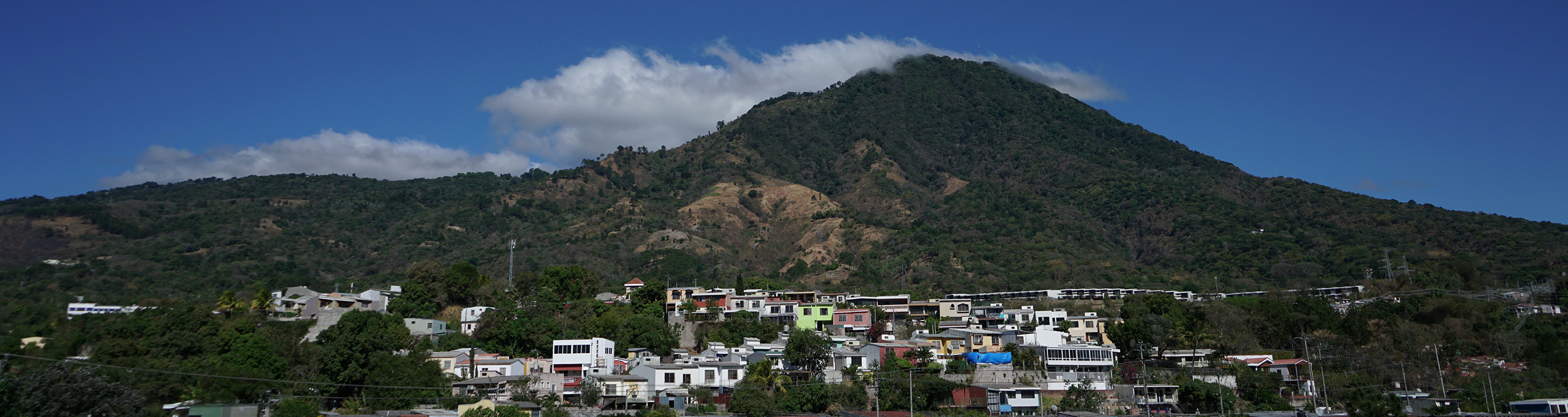
El Salvador, the smallest and most densely populated nation in Central America, achieved independence from Spain in 1821 and from the Central American Federation in 1839. Following a devastating 12-year civil war that concluded with the historic 1992 Peace Accords, the country embarked on a path of profound political and institutional reform. Today, El Salvador is defined by its remarkable resilience, transforming from a nation once fractured by conflict into a vibrant, forward-looking society celebrated for its dramatic volcanic landscapes, world-class Pacific surf beaches, and pioneering economic initiatives.
Population: The population of El Salvador is approximately 6.39 million.
Location: Central America, bordering the North Pacific Ocean, between Guatemala and Honduras.
Climate: Tropical; distinct rainy season (May to October) and dry season (November to April). The climate is tropical along the coast and temperate in the uplands.
Local Time: The local time of El Salvador is Greenwich Mean Time (GMT) -6, which is either 1 or 2 hours ahead of Los Angeles, depending on Daylight Saving Time.
Capital: San Salvador.
National Day: Independence Day, 15 September (1821).
Flag: The flag of El Salvador features three equal horizontal bands of blue (top), white, and blue with the national coat of arms centered in the white band. The coat of arms features a round emblem encircled by the words *REPUBLICA DE EL SALVADOR EN LA AMERICA CENTRAL*. It is similar to the flag of Nicaragua, which features a triangle encircled by the words *REPUBLICA DE NICARAGUA* and *AMERICA CENTRAL*, and the flag of Honduras, which features five blue stars arranged in an X pattern centered in the white band.
Currency: The currencies of El Salvador are the US dollar ($ / USD) and Bitcoin (BTC).

Contact
200 N Spring St.
Los Angeles, CA 90012
Email: sistercities@lacity.org
Website: sistercities.lacity.org